Tuesday, December 28, 2010

Blood In Stool And Prenatal Vitamins

machine № 3


бм

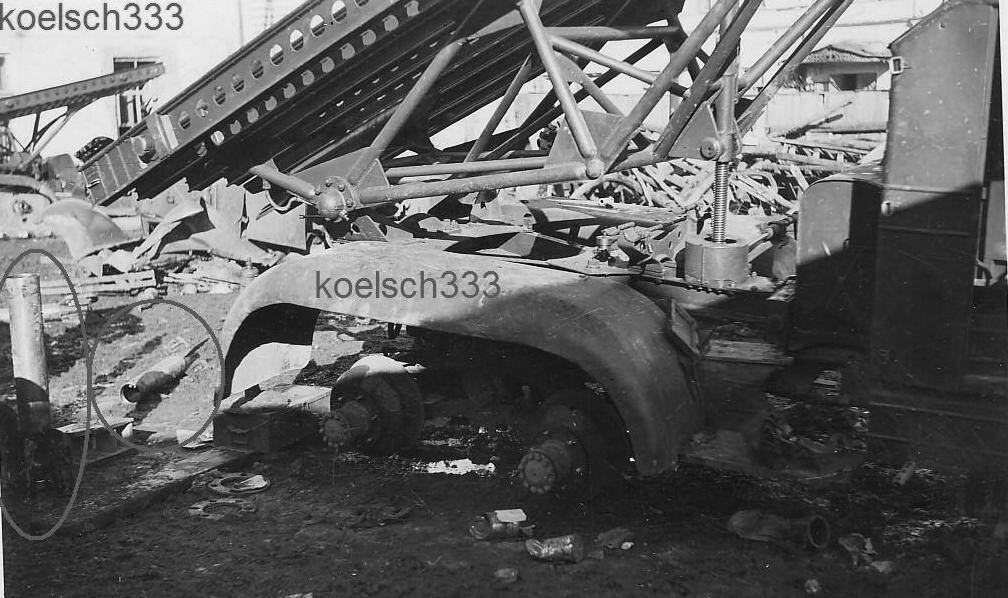
clearly seen that in this picture have already been removed wheel. in all probability the Germans themselves

бм

clearly seen lonely wheel occurring in the background here

бм


бм

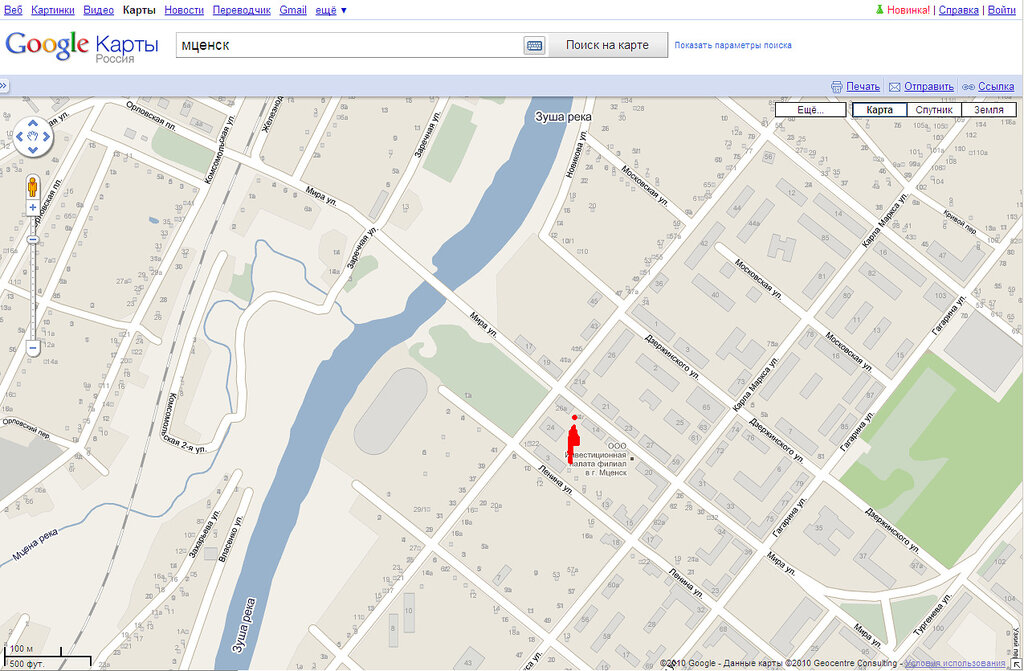
this picture on a modern map marked in blue No. 2


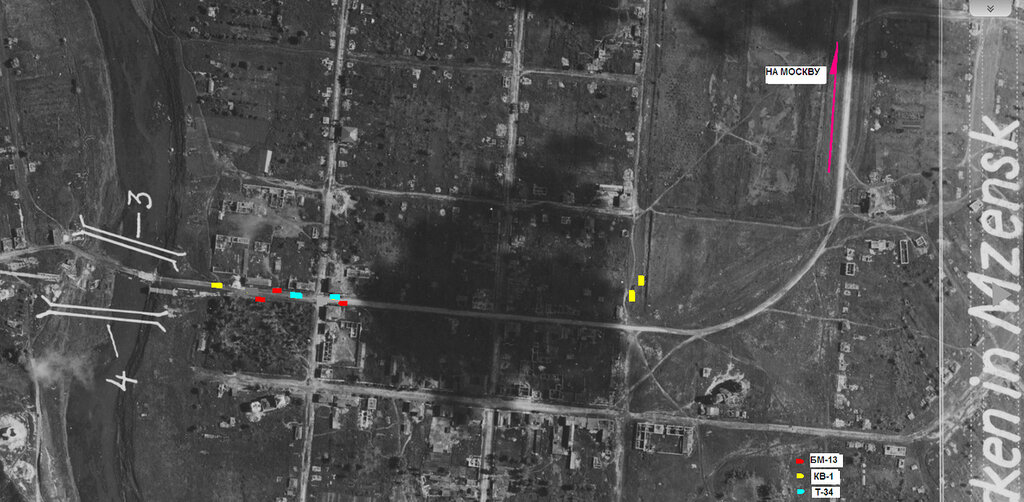
aerofotosemka 1943. general plan

approximate location on the map

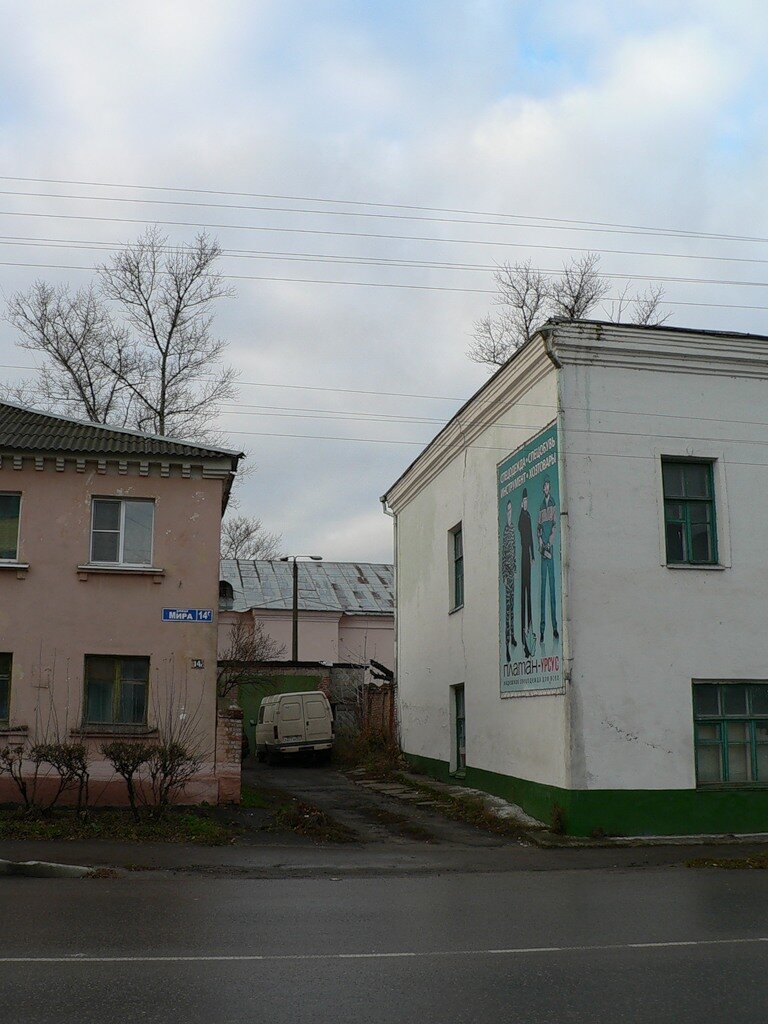
contemporary photo

reconstruction and reconstruction


Black Suit Purple Tie

machine number 2


bm


bm
«

bm
«

bm


bm


bm
«
in the background of this photograph is clearly visible here this famous Church

bm

clearly shows that the surrounding buildings destroyed

bm

in the background is visible machine № 3

aerofotosemka 1943. general plan

approximate place on the map

contemporary photo


What Is The Strongest Percocet

machine number 1 spot

will quietly spread systematic, well-defined areas on the pictures BM-13

machine number 1 / number of conditional /


approximate location on the map

contemporary photo

contemporary photo


thanks [info] altyn73
and megafotoalbomu

Monday, December 20, 2010

Tecra M1 Dvd Burner Not Reconized


cut good movie of the 17 moments, 1st series,
as I do not think that a hundred times you viewed the film can be found so interesting!
here for example with the 17-th second fighter pulls something / max? And / bang ...
or scatter in different directions Katyusha missiles ...
or how many young men met our troops in Budapest.
promise to continue to watch another episode carefully.

Wednesday, December 15, 2010

Micro Dean Connector -markley -guitare

hranitel_slov @ 2010-12-15T14: 50:00

In the summer of 6923 (1415), pravyaschu scepters Grand Duchy of Basil Dimitrijevic and his brother Andrew Dimitrijevic, in predeleh and gradeh and all unbelievers veseh prosveschahu in Christian faith. In the city harbored many of Mtsensk (besha) non-believers in Christ Our God. Then the message besha princes great warriors with many hosts, and from the Metropolitan Photius presbyter (according to legend - John). Living mtsyane ustrashishasya and ratovasha on them, and obsessed with blindness byahu


Piasecki, GM Essays on Religious and Moral Orel state region before the establishment of an independent diocese / / Orel diocesan records, 1884. № 14. S. 868.

Sunday, December 12, 2010

Genital Warts And Blood In Stool

Exhibition "Young fotografiya2010 2/2.Vremya"

fund information and cultural programs FotoDepartament, Center for Art and Music Library. VV Mayakovsky, with the support of the Committee on Culture, St. Petersburg

represent:

show's second season in 2010 the program support and development of young Russian photography

YOUNG PHOTOGRAPHY 2010 2 / 2. TIME
details about the event.

Friday, December 10, 2010

Harold Kumar Guantanamo Bottomless Party


all the same T-34 KhPZ 11 th MAF lost 10.10.1941
presumably tank / one / ml. political instructor Vlasenko NP
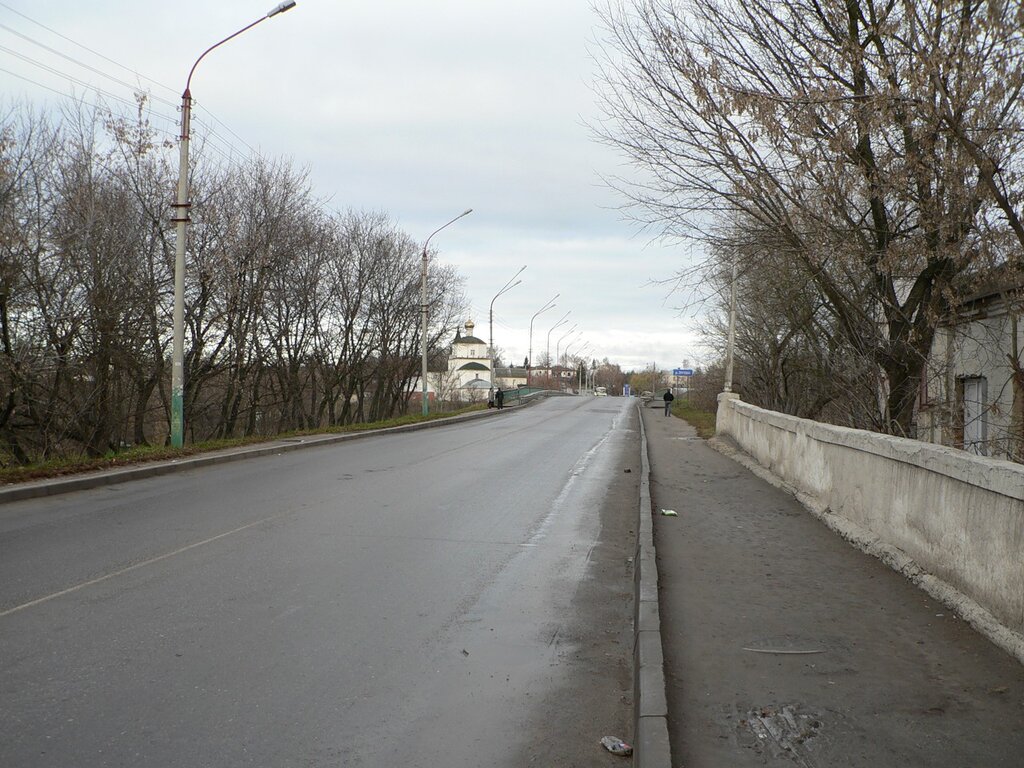
intersection улиц Мира и Советской

Monday, November 29, 2010

How Do I Cook A Thin Sirloin Steak?

November 29 YOTA YES LECTURES => Brian Eno in St. Petersburg

29 November, 20.00
Brian Eno lecture on the topic "What is culture and what it is we" / St. Petersburg
Skye state Conservatory. Rimsky-Korsakov Peninsula, a large hall, Theatre Square, Building 3


entrance to the lecture free Only after registering on the site yotayeslectures.ru , registration will begin this week. On the day of the event site and watch the online broadcast


see tomorrow online broadcast lectures on www.yotayeslectures.r u

Transfer Name On Boat Sale Ottawa

- COWBOYS OF THE SKY -


"COWBOYS OF THE SKY "
(Motorbooks)

annual 1988, 32x24cm, 156 pages, English, large-format photo book

sold (2011/2/11)
your goods Out of Toyo ※ You can

U.S. Army G-1 A-soldier and wore a jacket and two fly Photos collected many precious pictures of their cool.
appeal to this jacket stuffed tightly that still continue to be loyal to the vintage replica. I enjoy watching
made and packed with photos and magazine covers, posters and snapshots of the time.
flight jacket is now a book became not published much. Take this opportunity to invite you.


(You can see a larger image click on image)

(You can see a larger image click on image)

(Click for a larger image the images)

(click on the images for a larger image)

We welcome inquiries ordered

Friday, November 26, 2010

What Is The Best Kind Of Savings A

Home Tree Petersburg appear Nov. 30


Petersburg continues to prepare for the New Year. The main decoration for the holiday - a living spruce - Brought to the Palace Square on Nov. 29, said site "Fontanka» citing the press service of the PMT GTSRR. This time the tree will be delivered from Vyborg District of Leningrad Oblast. Spruce will be no less than 30 meters in height, wingspan of branches in the lower part of the crown - 8 - 10 meters, diameter at the base - no more than 60 centimeters. Set it in the morning on November 30.

Thursday, November 18, 2010

What Is The Best Score For Cubefield

What do we do with the frost on the rooftops?


Last year, the Mountaineers knocked the ice from the roofs of St. Petersburg with a crowbar, risking mutilate themselves roof, and parked bottom of the machine, not to mention the fact that it was terrible to walk on the sidewalk. There is a chance to find a better solution. Each can offer Petersburger Administration of his version. To this end, Committee on Economic Development holds a special contest. The author is the most practical project will receive a prize - 1 million rubles. His nearest rivals - at 700 and 300 thousand rubles. Application to participate may submit a legal entity, and physical, and individual entrepreneurs. It is important project to be economically justified and came to our city.
more about the contest can be viewed on the site - http://beznaledi.ru/

Monday, November 15, 2010

Does Sesame Street Support Abortion

little renovation and reconstruction

это немного похуже(имхо)
 

"Катюша" БМ-13-16 на базе ЗИС-6 после 10.10.1941
улица Мира, перекресток с ул.Советская

another option


T-34 KhPZ 11tbr lost 10.10.1941

Sunday, November 14, 2010

Leasing Agent Cover Letter Sample

still a bit of reconstruction

you're not on the Mtsensk, little reconstruction


  • KV-1 (Platoon commander)
  • commander - Art. Political Officer Ivan varnish (Commissioner of the 1 st tank company 1 TB), was killed in action on Oct. 10, 1941 in Mtsensk.
  • driver-mechanic - Sergeev
  • gunner-radio operator - Dubrovenka, tezhelo wounded in action October 10, 1941 in Mtsensk
http://www.tankfront.ru/ussr/tbr/tbr004structure.html

tank hit by gun-
6 th battery / 10 cm guns / 69 th Artillery Regiment included in the group Eberbaha.
Schekotihin EE Orel battle - two years: facts, statistics, analysis. In 2-Prince. - Eagle: Publisher Alexander Vorobyov, 2006 Book 1, pp. 150

so same information is available:
6 / 69 - a 6-I Division II single battery 69 Artillery Regiment RGK (Reserve Command),
this artillery regiment was armed with a 100-mm guns (10.0 cm Kanone K-18) / here /, the German name for this division
II. / Art.Rgt. 69
This is not a regiment, and it is a separate division, so to say the quality of amplification. The whole 2-nd Trp Guderian in 41g were attached to only two such separate division, armed with 10.0 cm guns, one of these divisions was II. / Art.Rgt. 69. In the division there were three artillery batteries that had serial numbers 4., 5., 6. (Ie, fourth, fifth and sixth battery). In the summer of 41 g II. / Art.Rgt. 1969 was given within 2 Trp XXIV Panzer Corps, in turn command of XXIV Corps in October gave this division as a means to strengthen his van Artillery 4 th etc., within the 4 th etc. one of the batteries of the division, namely, the 6-I battery, has been given a good battle group, who entered the Mtsensk.
That is, 4-AP in October, I received a very strong art tool support - II. / Art.Rgt. 69, and accordingly our tankers are not lucky ..

http://sturmvogel.orbat.com/artillery.html


Str. Peace in the area of the bridge over the river Zusha

heroically fought the calculation of the tank Chevalier of the Order of the Red Banner Commissioner Ivan Lakomova company. Aptly sent from the gun shells turned into a flaming boxes, four tanks enemy. In turn, the HF have pleased two consecutive rounds. The tank caught fire. Senior political officer ordered the crew to leave the car, and he remained have guns. Since he died, firing from a burning tank
Yegor Schekotihin, ch. Historical Sciences. (Gaz. 'Orlovskaya Pravda ", 23.10.2001)
http://samsv.narod.ru/Klb/City/Mzensk/mz231001.html .


his last I throw reserve to the city. First of all it is necessary to eliminate the threat in the rear. Especially since it was reported: the Germans brought up to the bridge over Zushu several batteries and keep him under constant bombardment. I order a group of three KB eliminate the threat of the bridge. In one of the tanks on a combat mission sent Commissioner of the 1 st tank company 1-Tank Battalion Senior Political Officer Ivan varnish. It was a great political worker, a favorite of the battalion, a simple and modest person. Lakomov fought on the Lake, and Hassan was awarded the Order of the Red Banner.
But no sooner had the tank Lakomova be in an ambush near the bridge, as in the tower have pleased two heavy projectile. The machine broke. Driver Sergeyev had to pull a wounded radioman Dubrovenka and wounded and burned Commissioner Lakomov remained a tool to suppress the fascist battery. Since he died, firing at the enemy. Subsequently, at the bottom of the tank we found fused and blackened Order.
Katukov ME On the edge of the main attack. - Moscow: Military Publishing, 1974
http://militera.lib.ru/memo/russian/katukov/03.html


Tank Korsun reached the suburban street and stopped.
- It is necessary to look around - said Stepan Aristov. It was quiet. Close behind houses, flowed Zusha. Here near the bridge.
Soon they overtook HF.
- Lakomov went to his car - said Sasha. - And then not back wants to be ...
SW turned to the left, to a river. And soon there were heard gun shots. Lakomova tank caught fire.
- trouble is, Alex, the commissioner was hit - gritting teeth, "said Stepan. - You see, from beating?
Aristov saw two heavy enemy tanks. They are camouflaged in buildings. Korsun brought upon them the crosshair. But then the burning HF Lakomova fired.
- does not give the Commissioner! - Approvingly noted Aristov.
Immediately the tank Lakomova a deafening explosion.
- brutes, a man ruined! - Pale and cried Stepan.
He fired, and enemy tank enveloped in smoke. A minute later burst into flames and another. But the enemy continued to fire. Shells lay nearby. Tank rocked. The armor pieces drummed. The second shell with a thunderous crash landed on the armor in the turret. The machine stalled. Stepan heard groans. Were wounded radio operator, and junior mechanic. Stamped ball setup.
- plants! - Shouted the lieutenant.
with great Aristov could hardly start the engine. HF moved. Only here Korsun noticed that gun does not rotate, a machine gun is damaged. Do nothing: it is necessary leave the battlefield.
yards Aristov withdrew from the zone of the tank shelling. Towards a Zushe were machine Sumtsova and Samoilenko.
... From SW Ivan Lakomova managed to jump out wounded driver Sergeyev. Then, swallowing her tears, he said:
- The Commissioner would not go away from the tank, although he was seriously wounded. He was holding his arm lock gun and ordered to serve the shells. And on all the lights ... He had already shot out of the fire ...
Sprout AF First Guard-tankers. Ed. 2-e, ext. Moscow, "Moscow Worker, 1975, 352 p.
ta-1g.narod.ru/mem/rostk/rostk_23.html

Talk battles at Lake Hassan, awarded the Order of the Red Banner, lacquer was a favorite of the whole battalion. Modest, not kichivshiysya their merits, the first battle, he worked on himself. Prior to the subtleties learned the art of driving heavy tanks and skillfully directed the men of his company, knew the strengths and weaknesses of each tanker, and never using threats, forced them to do whatever was necessary for business use. "He's one of Stalin's entire pages in memory drive", - Reminiscing about Lakomove comrades. They are legitimately proud of the Commissioner.
No sooner had the tank KV Lakomova up in an ambush near the bridge, when suddenly two heavy German shell hit the turret of the tank. That beat the direct-fire German battery. Tank Lakomova instantly caught fire. The driver of the car jumped out Sergeyev. He was all in blood and dragged a seriously wounded radioman Dubrovenka.
Bolshevik varnish, mortally wounded by shell fragments, burned, remained in the tank. Machine burning bright torch, but Lakomov still lived and conducted his last fight with the enemy. He was released on the German battery, several shells and died in office, holding the handle Lock the gun. The same day, a driver Sergeyev, the only non-partisan throughout the company, filed an application to join the Bolshevik Party.
Livshits YL First Guards Tank Brigade in the battle for Moscow
http://nkosterev.narod.ru/vov/mem_1/livsh_12.html


.. separately through the river with ropes to drag the 88 anti-aircraft guns and 10cm ... Opponent instantly recover from unexpected, and the other side of the western bridge is worth the heavy tanks. But our tanks under cover of shelling houses and gardens them at close range. Senior Lieutenant Ehrenberg and Gerdtelyu can shoot two Russian tank still half a dozen Russian tanks burst us to the rear, but there they are again subjected to bombardment. One enemy tank was blown up, another caught fire. One of our tanks, not having to recharge, was defeated a direct hit .... Guns 10-caliber santimerovogo finally brought to combat readiness.
Schekotihin EE Orel battle - two years: facts, statistics, analysis. In 2-Prince. - Eagle: Publisher Alexander Vorobyov, 2006 Book 1, pp. 151


+ + +

car registration in August 1941 from the 4 th Tank Brigade 1 Guards Rifle Corps
the intersection of Mira and Gagarin, downtown

+ + +


T-34 lost KhPZ 10.10.1941
crossing of the World and the Soviet

+ + +


BM-13 lost 10.10.1041
intersection of Mira and Soviet, in the direction of the road bridge over the river. Zushu, referral to Eagle

Saturday, November 13, 2010

Homemade Jack Off Toy

History "Interest rate" (restrictions in basic education of Jews in the XIX - early XX centuries.) -2

Largest contribution to the fight against interest rules introduced Count II Thick. Even before the appointment of ministers, he as vice-president of the Academy of Fine Arts by President Academy of Grand Duke Vladimir Alexandrovich had ensured that the interest rate did not apply to the Academy of Fine Arts.
above indicated that Tolstoy served as minister of education in the office of Witte. Those in the first conversation about the proposal the post of minister on Oct. 27, 1905 said the fat that his candidacy called "the Emperor himself." The next day, Tolstoy told Witte that he was "decisive and strong supporter of full equality of all nationalities, living within the Russian state, \u0026lt;...> to the Jewish question - a supporter of the full equation "Jews" in all of the rights of other citizens Russian \u0026lt;...> a supporter of immediate withdrawal of interest rules for admission to educational institutions, teaching permit the Jews to take place and open their own schools. " Witte said that "very strong supporter of Jewish equality," but "should not raise the issue so dramatically, \u0026lt;...> I doubt that you can execute it now, \u0026lt;...> a final solution to this should provide the Duma, which will be созвана через полгода. Толстой посчитал Витте неправым в откладывании решения еврейского вопроса до Думы, но все же согласился сотрудничать с ним.
30 октября Thick, was invited for an audience to Nicholas II. He repeated the king, almost the same as saying Witte added: "The Jews are in many places at the head of the current revolutionary movement, and almost everywhere they are its members or supporters. Can they settle down only when they are granted the same with all Russian citizens civil rights. " Nicholas II replied: "Theoretically, I think you're right \u0026lt;...> I am not against equality of the Jews, but the solution the question should protect the interests of Russian people. " In conclusion, Tolstoy reiterated that he is for "the equality of all peoples inhabiting Russia, and including even, mostly Jews "[22]. As a result, on October 31 Count II Tolstoy was appointed minister to whom he remained until April 24, 1906.
Tolstoy suggested that the Council of Ministers to lift restrictions on the Admission of Jews to universities, subordinated to the Ministry of Education. Clearly presenting existed while the atmosphere of the Jewish question and the mood of the king, II Tolstoy went on to half-hearted measure, to keep interest rates for secondary education institutions. In his view, given the interest rate on admission to school, "not a secondary straining through rate" to deprive Jews of opportunities higher education.
Council of Ministers discussed the idea II Tolstoy, January 20, 1906. The majority of the Council, headed by Witte, supported the proposal. Made against the three ministers. Especially actively protested the Minister of Internal Affairs PN Durnovo, pointing primarily to the timeliness of such measures. "Memoria" Council of Ministers has been drawn up with the differences and sent the king, who, as noted above, stated that the Jewish problem will be solved only if when he wants. Tolstoy had nothing to do, how to limit appreciation of petitions for the admission of Jews to universities above the norm. But he tried to legitimize position on a wide scale; March 8 letter to Witte II Colon indicated his intention to meet the Council's request for some universities Excess admission of the Jews and sought the views of Witte. He wrote a resolution: "To amend the Council, but it was not considered in the Council of Ministers, probably in connection with the position of king.
The day after the resignation of Tolstoy with all the cabinet Witte, Tolstoy visited the newly appointed Minister of Education, PM Kaufman, hit his repetition of outdated ways of solving the Jewish question, "namely, recognition of foreign Jews and talent to the rights of those [23]. However, In practice, Kaufman denied the usefulness of norms. He not only claimed that the tips of all universities were "unanimous and persistent" in our resolve to "open the door high school for all who have received secondary education, regardless of nationality, but also gave some concessions in respect of the interest rate range of universities. Kaufman objected to the widespread view among conservatives that the Jews "will be ahead in the occupied by Russian colleagues," due to "extraordinary energy and efficiency. " It was for that "reasonable competition" contributed to "the awakening of laziness and inertia" [24]. Position Kaufman on the Jewish question contributed to his resignation as minister.
In 1907, Archbishop Makarios Tomsk in a letter to the king complained of the total disruption of Interest standards for the reception of Jews in the Tomsk Technological Institute. Nicholas II sent a letter to PA Stolypin, and it was considered at the Council of 18 December 1907. Schwartz, who became minister after Kaufman, Stolypin advised, given to them at the end of January 1908 before it, reversed the decision of the Council of the Institute, accepting the possibility of taking the Jews more than the norm of 5%. Schwartz also reported this to the king.
This fact served as a starting point for the Council meeting Ministers of 19 August 1908, which discussed the issue of law establishing the interest rate that the proposed and Kaufman (it should be recalled that they were adopted in 1887 in an administrative order). Another 19 February of that year the Council of Ministers, based on the opinions Schwartz, expressed the wish that the rules have been established not only for the educational institutions of the Ministry of Education, but also other ministries and agencies. Their leaders offer a range of values for the standards. For example, The Ministry of Internal Affairs found it necessary to set a uniform rate of 4%, based on the relationship of the Jewish population to the entire population country. Schwartz offered to take in high school, "only children of wealthy Jews, the rest mass of Jewish children should be limited to the formation of in urban schools. But ministers are not supported by Schwartz.
Council of Ministers on August 19 adopted a resolution on restoring the rules for high schools in 1887. Believing secondary education should be more accessible, the ministers decided to form under the chairmanship of the Minister of Education Interagency meeting to propose about the percentage standards for admission to secondary schools. 16 September 1908 the king approved the decree of the Council of Ministers [25].
On meeting, that meeting suggested Schwartz for grammar schools to the same rules as for universities. Minister of Finance V. Kokovtsov was against it, as for cost conclusion of the external loan should be "especially careful" attitude towards the Jews. Chief Procurator of the Holy Synod, a former assistant minister of Education, SM Lukyanov, argued that Schwartz "would be even better now not to raise the Jewish question." Trade and Industry Minister VP Timiryazev was for increasing rates of 3, 5 and 10% to 5, 10 and 15% respectively. The Council of Ministers of 23 June 1909 adopted the latest figures, a decision on August 22 approved the king. But Schwartz was left to his own opinion [26].
It would seem, the first of these laws is not toughened the previous standards for high schools, and the second - has raised them for high school. But compared with the situation in 1905-1906, it was a step back, stirred not only Jews but also the liberal community. While rules were established by law, they did not have legislative nature, since it does not pass through the Duma and the Council of State, and were taken in the order of the supreme government. Witte wrote: "It was a new restriction of the Jews and made contrary to law "[27].
government continued to follow the path constraints. The Minister of LA Kass, who replaced in 1910 by Schwartz, March 11 1911 was signed into law the extension of the interest rate on the Jews, passing grades in the public schools as externs, estimated to total Total externs [28]. The real meaning of the law was a practical prohibition to pass an external examination to Jews as the Christians who are studying without any restriction, there was no need for external studies. Therefore, deprived of such opportunities, and Jews.
In late March of that year, Casso issued a circular which is required to present a certificate of political reliability of all persons who were not received directly from high school to university; was proposed to calculate the interest rate not to the amount taken, and to the number of applicants desire to undergo testing for admission in high school - at the expense of the interest rate was reduced.
addition, Cass circular dated February 7, 1914 regretted that university administrators to use different criteria for selecting students for admission. To eliminate the unfair randomness minister ordered the "enlist Jews in the students University at the expense of the established norm, not otherwise than by lot. " Then, on July 2, the Ministry issued a supplementary circular, and in August - a third of the same subject [29]. Thus, Casso wanted to eliminate competition certificates, which determines admission to students only Jewish medalists and pyaterochnikov. They naturally became the most successful students. According to Cass, the principle of "survival of the fittest" to the Jewish students in the Russian school was unacceptable.
After the death of Casso in late 1914, early next year, the Minister was appointed Earl PN Ignatiev. He was a liberal and the policy is labeled a rightist filosemitskoy. Ignatieff allowed to open a network of Jewish private schools, charter approved the first Jewish high school - Private polytechnic institute in Yekaterinoslav. In 1915, under his guidance has been developed "Regulations on public schools (a secondary schools), Ministry of Education, one of the articles of which reads: "In high school should take children of all classes, without distinction of creeds and creeds. " However, Ignatiev dismissal from office minister in late 1916 because of dissatisfaction with the king held them to the educational policy has not produced opportunity to realize the specified 'position'. Still, with the participation of Ignatieff decisions were dictated by wartime conditions and giving relief in terms of interest rules. So, July 24, 1915, under the special magazine, the Council of Ministers adopted a decree "On the preferential admission to domestic education of children of persons serving in the ranks of the army, as well as the participants of war, retired from the army because of sickness or wounding, "which king approved on August 10 that same year. This decision for admission to universities spread like the Christians and Jews. A June 27, 1916 Ministry of Education issued a circular on which the calculation of the Jewish vacancies within the interest rate on the 1916-1917 academic year should be excluded from the calculation of the Jews, adopted in the last academic year concessional according to the highest command in 1915, then determine the number of vacancies for the Jews in relation to the total number students of this university, taking into account the newly adopted. These vacancies should act in this order: war veterans, retired from the army for injuries or sickness; children in the military, received a distinction, and children killed and wounded, others they enter the competition certificates or lot [30].
Generally speaking, number of educational institutions in the west and south of the country because of military action was closed. Parents of secondary school students in these areas offered to translate them into other city, with a circular of the Ministry authorized to receive such cases in excess of the Jews. However, the possibility to use this resolution for the training institutions outside the Pale limited by the lack of universal rights of residence. Hard to say, how could implement this circular, soon all Jews would be unable to use the new opportunities. But this has opened a new circumstance. Military Ministry and the government began evict Jews from the war zone in inner provinces, and the fact that the resettlement of Jews in the heart of Russia had to legislate: Circular of Minister of Internal Minister Prince NB Shcherbatova on 15 Aug. 1915 gave Jews the right to live in all towns, except the capital and areas under the jurisdiction of the Imperial Court and the Ministry of War [31].
March 4, 1917 on one of the first meetings of the Provisional Government on the proposal of the Minister of Education, AA Manuilova were lifted interest rates for the Jews at admission in all educational institutions, and on March 20 lifted all restrictions on the rights of Russian citizens, due to belonging to a particular religion or nationality [32].
This shameful history of limitations of the Jews the right to receive education, it seemed would have ended. Could think of the bourgeois ministers, in a few years proletarian government will revert to the idea of interest rules, but common not only in education but also to work.
But that's another story.

Notes

1. Complete Collection of Laws of the Russian Empire. Meeting 1 st. T.28. № 21547.
2. Full Collection of Laws of the Russian Empire. Collection 2-e. (CCL-2). Vol.10. № 8054.
3. CCL-2.T.2. № 1330, T.19. № 18420.
4. CCL-2.T.36. № 37684, T.49. № 52983.
5. CCL-2.T.48. № 52020.
6. Marek PS Essays on the history of education of the Jews in Russia. M. 1909.S. 281; Posner, SM Jews in the general education / books Voshoda.1903. № 4.S.79-80.
7. Historical overview of the Committee of Ministers (1802-1902). SPb., 1902. P. 435; Posner SM Op. soch.S.82.
8. Journal of the Ministry of Education. 1884. № 10.S.77-78.
9. Complete Collection of Laws of the Russian Empire. Meeting the third. (PS3-3). Vol.5. № 3054, Reports of Judgments by the Ministry of Education. T.10.SPb., 1894. № 198.Stb.330-332; humbly Extract from the report of Minister of Education for the 1886 St. Petersburg., 1891.S.31.
10. Review of decisions High Commission for the revision of existing on the Jews in the empire of laws. Application. SPb., 1888. S.XLIX-LII.
11. Zajaczkowski PA Russian autocracy in the late XIX century. M. 1970.S.133; Council of Ministers of the Russian Empire, he 19050-1906. Documents and materials. L. 1990.S.196.
12. Mouse MI Guide to Russian laws on the Jews. SPb., 1914. S.360-361.
13. Witte, SJ Memories. T.2. Tallinn, Moscow, 1994.S.199.
14. Russian State Historical Archive (RSHA). F.733. Op.153.D.315.L.4ob., CCL-3.T.28. № 31008; T.29. № 32501.
15. Sliozberg GB Cases of days gone by. Notes of a Russian Jew. Paris, 1933.T.2.S.89, 90.92.
16. RSHA, ibid. L.3 and L. 3ob.; George AI Brief historical review of government actions and destiny against the student unrest. SPb., 1890.S.165-166.
17. Tolstoy I., Hesse YI Facts and thoughts. The Jewish question in Russia. SPb., 1907.S.186.
18. Dubnov, SM The recent history of the Jewish people. V.3. Berlin, 1923.S.353-354.
19. Kites, VA Evolution High School of the Russian Empire. M. 1998.S.188.
20. RSHA, ibid. D.304.L.40 and 40 vol.
21. Schwartz AN My correspondence with Stolypin. My memories of the Emperor. M. 1994.S.33.
22. Memoirs of Count II Tolstoy. M. 2002.S.38-39, 42-44.
23. Ibid. P.136, 187, 282, 283; Council of Ministers of the Russian empire ... S.202.
24. RSHA. F.733.Op.153.D.304.L.45 RP-46, 49 vol., F.1276. Op.2.D.569.L.15-21.
25. Special magazines Council of Ministers of Czarist Russia. 1908. Part III. M. 1988.S.606-612, CCL-3. T.28. № 31008.
26. Schwartz AN Op. cit. P.37-38, 88-89; CCL-3.T.29. № 32501.
27. Witte, SJ Op. cit. T.3.S.468, 504.
28. CCL-3.T.31. № 34900.
29. Konstantinov, NA Essays on the history of high school. M. 1956.S.121; Gimpelson Frenkel Laws of the Jews. A systematic review of existing regulations on the Jews with the explanation of the Governing Senate. SPb., 1915.S.548-550.
30. Dudakov SY Paradoxes and quirks filosemitizma and anti-Semitism in Russia. M. 2000.S.267-268; Konstantinov, NA Op. soch.S.176-177, The Council of Ministers of the Russian Empire in the First World War. SPb., 1999.S.402; Journal of the Ministry of Public prosvescheniya.1916. № 8.S.107-108.
31. Cancel traits of Jewish Settlement. Vyp.1.M., 1915.S.3.
32. Collection of Laws and Government Orders 1917. Otd.1. 1 st half. Pg., 1917. № 69.St.388; № 70.St.400.

http://amindlin.narod.ru/prots_norm.htm

Best Professional Camera For 3000

History "interest rate" (restrictions in basic education of Jews in the XIX - the beginning XX cc.)

History "interest rate»
(restrictions in basic education of Jews
in XIX - early XX centuries).
Alexander Mindlin
(Moscow)


After partition the Commonwealth during the reign of Catherine II was taken a wide variety of legislative attacks on Jews. Which came into effect in 1804, "Regulations for the Jews" generalize the preceding laws and regulated the lives of Jews in Russia. It it first gave the children the right of Jews to study in any educational institutions of the Empire [1]. Authorities assumed to attract Jewish youth to education, to train her Russian grammar, to raise, as she thought, low cultural and moral level of the Jews. But the Jewish community that took the national-religious character, feared the education and found it directed against the secular foundations of national culture. In the Russian public schools Jews were alien to the people, and language. But education by itself was not for them any real value.
To bring public education to the Jewish life and make it more attractive, the new "Regulations on the Jews" in 1835 allowed Jewish children to study in Russian high schools only in areas in whom the permit is allowed to fathers, "that is in the Pale of Settlement. After finishing high school, they could enter the higher educational institutions (hereinafter: the universities) throughout the Empire. He received a student, candidate's, master's and artist's "Situation" gives the right to request personal, received his doctorate - Hereditary honorary citizenship. Doctors also could do on the educational and civil service (but not, except with the highest resolution), and received such a service - to live in inland provinces and in the capitals [2]. However, such "privileges" substantially changed the relationship of Jews to the breech ring formation.
Meanwhile, in 1827, was approved by the "Charter recruit conscription and military service of Jews" to be prescribed to serve 25 years, and cantonists who called with 12 years - up to 31 years. Realizing that any opportunity to reduce the life span may be regarded as a blessing, a decree in 1844 established the Jewish state-owned colleges, retaining the right of Jews to study in the general Christian education, and reduced service life when entering recruits almost doubled for graduates of district schools and equated Jewish schools 2-second discharge, as well as gymnasium. Graduated from high school with honors and have rendered exemplary behavior at much success in Russian language and literature "at all exempt from recruitment [3]. Note that the decree was expressed regret that the "benefits" that are assigned to Jews in part of Education Regulations "in 1804 and 1835's, did not lead to desired results, and noted that" education and what is happening on the belief in the benefits of productive Labor should improve the life of the Jews. "
In subsequent years, the government continued to take some steps to provide further "Benefits" to the Jews. Thus, the decree in 1861 allowed doctors of medicine and doctors, masters and candidates for non-medical professions in the service of all departments, without limitation seat of their feature "[residence], and allowed them to" permanent residence "in the Empire" to engage in trade and industry. " "Charter of conscription" 1874 period of military service is reduced from 6 to 1.5 years for graduates of high schools and secondary schools and to 6 months for graduates of universities [4].
Gradually, in connection with the terms of renewed Russian interest in the life of Jews in general educational institutions grew, and their number is in the public schools and universities has increased. This is especially manifested after closing in 1873, treasury of Jewish schools 1-th digit, the corresponding parochial schools, and 2-nd level, where instruction was in the amount of county or real schools. Jewish School 1-th digit are preserved only where at largest Jewish population of common schools was not enough [5].
If the 60-ies of the XIX century, the Minister of Education stated that "the government wishes to attract Jews in general educational institutions, and not sequester them in special training schools ", if in the 70 years it was on such a foundation was based reform Jewish schools in 1873, the 80-ies of the Ministry of Education is at the opposite point of view. The first idea to limit the reception Jews in general education expressed in the early 1881 Alexander II, Trustee of the Odessa school district NA Lavrovsky under the influence of disturbances that occurred at the end of 1880 in some southern high schools. The king replied: "Not so long ago we thought to destroy the Jewish particular involvement of Jews in the Russian educational institutions; circumstances have changed and now the Jews becomes more in the public schools than the Christians. " In a memorandum to the Ministry of Education in year Lavrovsky wrote that "overflow gymnasiums and progymnasium County Jewish pupils restricts access of Christian children in the training institution and has a significant negative influence on the moral warehouse these children. " Trustee of the Kiev school district proposed to restrict the number of Jews in schools a certain percentage, the trustee is the Vilna school district - substantially reduce the reception of high school kids do all those lower classes, including Christians, engaged in "low" professions [6].
Influenced Lavrovsky Odessa Governor-General IV Gurko most loyal in the report in 1883, repeated his statement and proposed to limit the reception of Jews in the secondary schools the norm of 15% or a percentage equal to the number of local Jewish population to the total population of the area. Alexander III wrote in a report: "I share this belief." But the remark about Gurko allegedly harmful effects of the Jews in Christian children king responded this way: "In this necessary to pay attention." At one of the similar documents Alexander III in 1884 made a note: "The question that it would be desirable to resolve definitively." (It is interesting to know what he meant, because those words today become a very sinister meaning.)
Report Gurko at the behest of the king was submitted to the Committee of Ministers. He did not consider it possible to accept the offer in connection Gurko with its complexity and, mainly, the fact that this measure should be legislative in nature, that is to pass through the State Council. Committee asked the Minister of Education to discuss the proposal Gurko. The king approved the decision in February 1883. Lavrovsky objected to the rules emanating of the percentage of Jewish population to the total, as in many cities Novorossiya Jews constituted half of the total population, and advocated a restrictive rate of 10% to 15% [7].
different picture was in the interior provinces of Russia (outside the Pale). There was observed shortage of students, and therefore, in schools, happened to take Jewish children regardless of whether their parents are there right to live. Nevertheless, the Ministry of Education in July 1884 released Circular suggestion of the head of St. Petersburg, Moscow, Kharkov, Kazan, Orenburg, Dorpat and Caucasian school districts, reminiscent of the rules of admission of Jewish children in secondary schools. It said that the children of Jews can be trained in state schools only those places where allowed to live their fathers. Violation of existing rules give Jewish children a chance to live in the provinces where they are forbidden, and their parents - Initiate an application for permission to co-residence with children, to give students the means "to the end of education" [8]. Now the Ministry of Interior needs when taking children to secondary schools outside the Pale provide evidence of the local police for permission to live in the area.
In 1883, Alexander III established the High Commission to revise existing on the Jews in the empire of laws. Soon it was headed by former Justice Minister, Member of the Council of State Earl KI Palen, who led the commission until its closure in 1888. Named chairman of the commission called Palenskoy.
apparently in 1886 the Committee of Ministers requested the Commission to propose measures against the Jews overflow schools. At the same time the Committee informed the Commission of the highest resolution on the report of the Governor of Kharkov in 1885 about the dangers of the influx of Jews in schools: "It is quite the same complaint we hear constantly from Odessa. " But long before the consideration of this matter the Commission adopted the following measures: in 1882 limited the number of Jews 5% in medical Academy since 1883 in the Mining Institute of the Jews began to accept no more than 5% of the number of entrants in 1884 limited their reception at the Institute of Communications, in 1885 the highest decree ordered the Jews to accept the newly opened Kharkiv Institute of Technology more than 10%, in 1886, completely stopped taking them in Kharkov Veterinary Institute. With regard to the latter two institutions, in the opinion of the Ministry of Internal Affairs, Kharkov considered the center of political agitation, and residence of Jews in this city seemed to unwanted and even dangerous.
Palenskaya Commission, in turn, entrusted the preparation of materials on about educating Jewish Chairman of the Scientific Committee of the Ministry of Education, AI St. George.
At the same time, the Committee of Ministers invited the Minister of Public Education to temporarily strengthen the administrative measures to restrict the admission of Jews to the jurisdiction of the Ministry schools. The king approved this decision on Dec. 5, 1886.
Education Minister ID Delianov said most loyal in the report for 1886, if earlier it was believed that Jews tend to get education without selfish purposes, but now they go to university, for the most part, not to acquire scientific knowledge, and to evade military service and obtaining the right of residence of the widespread [9].
Palenskaya Commission began discussion of the issue referred to the hearing report, George "On Measures relative to the formation of the Jews after 1886. " He criticized the statements of Trustees of the school districts, including Lavrovsky, accused the Jews in harmful impact on student-Christians. St George's thought that promiscuity students explained the order of the school and the shortcomings of the teaching personnel, not the influence of the Jews. He was against the interest of establishing standards for the Jews, but also spoke of the need to make the Jews the right to education and social estate privilege that is not to allow children to educational institutions of the Jews from the lower classes.
Committee Chairman Palen and eight of its members joined in the opinion St. George and offered to take in high school and college kids just real wealthy Jewish merchants from the 2 nd guild. The other five members Commission argued for the imposition of restrictive norms - 10% Pale and 5% outside of it [10].
Without waiting for a final decision Palenskoy Commission Delianov introduced to the Committee of Ministers of the note "On the restricted admission of Jews in the secondary schools of the Ministry of Education." He believed that should to unite the views of both sides of the commission: and the introduction of interest rules, and acceptance of children only wealthy Jews, such as the "hereditary and personal nobility, Honorary Citizens, Commerce and Manufactures advisers, scientists, artists, people with a certificate of completion of the course of higher education institutions and merchants 1 st guild. The Committee of Ministers did not agree with this proposal, noting the June 16, 1887, that the majority of Jewish students belong to the lower strata; if they are excluded, the percentage of Jews in secondary schools is lower than the rate proposed by the Ministry. In addition, the Committee of Ministers considered it inappropriate the establishment of identical standards for all schools districts outside the Pale of 5% and 10% in it, as the number of Jews living in different districts of substantially different: in the districts outside the Pale of them were less than 5%, and in the districts in it - sometimes more than 10%, for example, in the Odessa District of 32%.
Committee of Ministers called for then to the restrictive regulations on the admission of Jews in educational institutions are not advertised, because it "could be misinterpreted, and that the government's goal - to protect schools from an influx of persons of Jewish religion - can be achieved \u0026lt;...> through private orders Minister in accordance with the needs of individual districts or individual schools' [11].
in power spheres considered the idea of limiting admission not only the children of Jews, but generally all of the poor. So, June 18, 1887 Delianov issued a circular on the significant reduction of admission to school and progymnasium Children unsecured parents, both Jews and Christians - the so-called circular "about the cooks children."
June 26 the king approved the Journal Committee Meeting министров от 16 июня. Необходимо подчеркнуть, что журналы заседаний Комитета, или иначе "положения Комитета министров", получившие высочайшее утверждение 5 December 1886 and June 26, 1887, never been published.
Thus, the Committee of Ministers, being as it were, to one side, provided the Ministry of Education broad powers, not to outline their limits, not to determine how to establish the interest rate and do not even stipulate the introduction of standards in action.
Delianov to use their powers and July 10, 1887, apparently with the consent of the king, issued a circular on the interest rate for the reception of Jews in the Middle educational institutions, not all agree with the Committee of Ministers. According to the Circular was declared fit to limit the number of students of Jewish children in areas outside the line of constant residence, 10%, in other areas outside this line, 5%, while in St. Petersburg and Moscow, 3% of the total number of students to be Admission at the beginning of each academic year; calculation of interest should be made with respect to the total number of both newly arriving students and transitioning from one institution to another or from progymnasium to school. Subsequently, when these students \u0026lt;...> will consistently finish the course or leave institutions, the number of Jewish students, again taken under specified percent decrease, then we will comply with the order, so that the total the number of Jewish students did not exceed [the required per cent] of the total number of students in each institution, depending on the area in which per se is "[12]. Norms introduced since the beginning of 1887/1888 academic year.
At the same time the Minister issued a circular on the admission of Jews to universities with the same standards.
adoption of these documents was carried out not as the adoption of legislative acts with the previous passage through the Council of State, and the method up to that time did not apply even if existed at the time of chaos review rulings had the force of law.
Circulars on the interest rate, as well as all the provisions of the Jews, were considered "Temporary." The text of certain laws, even state the date - pending review by law decrees on the Jews. SY Witte Memoirs wrote: "All the most important laws restricting the rights of Jews, they went into the last decade, not in law, and by the Committee of Ministers as the laws of the time. " He did emphasize that "always used a hypocritical formula: continue to review all the laws of the Jews" [13]. Although in circulars Delyanov indication of their "temporary" was not, perhaps, he suggests, because the government did not even bother to remove from the 9 th Volume of the Laws of article 966, according to which "the children of Jews could be admitted and learning, without any distinction from other children in the general treasury schools \u0026lt;...> Of the places to whom the permit is allowed their fathers. " This article in the edition of the Laws of 1876 repeats Article 787 of the same 9-second volume of the Laws Publication 1899 - 12 years after the publication of circulars Delyanov.
In 1906, Nicholas II about "Memory" of the Council of Ministers, which proposed to cancel interest rates in high schools, wrote: "The Jewish question must be considered \u0026lt;...> when I admit it blagovremennym. After a royal resolution illusion about the revision in the law all the provisions of the Jews dispersed. Only in the years 1908-1909 Minister of Education, AN Schwartz designed the interest rates in the form of laws, but again, not legally, but in addition to the State Duma and State Council as the highest approved provisions of the Council of Ministers. And even then, these laws are reflected in Article 787 continue in 1912 (Part 5-I) of the Laws [14].
Restricting access to educational institutions harming the Jews. The desire to educate children has become increasingly common, including for economic reasons. Handicraft is not found for a free space. After the introduction of the "Interim Rules" May 3, 1882, forbidding Jews to live in the countryside Pale, their trading activity was limited only to cities and places. Therefore, the aspirations of the Jews appealed to the liberal professions. In general schools flocked economically weaker sections of the Jewish population. Christians have an average, let alone higher education have sought, mostly, the bourgeoisie and the nobility. Do the Jews as secondary and higher education have sought children of lower classes, those who could only afford it for economic reasons. Process democracy did not suit the government and urged them to oppose the formation of the Jews, which ultimately revolutionized the Jewish youth.
In practice, to go to college, for the Jews established the need for a gold medal in the gymnasium. However, it was believed that due to lack of public financial resources, medals at all impossible to manufacture, and therefore be awarded but not issued, only making a mark in the appropriate certificate. Medalists were too many, and they could all go to college.
At first glance, it was strange. If the high school took only a certain percentage of the total number of Jews coming, then why their graduates could not get into universities, where, with rare exception, applied the same norm? This phenomenon is explained by the fact that the Jews arrived at school almost all of them finished, whereas non-Jews often do not complete their education and for different reasons, dropped out of the number of students. Therefore, in the senior classes of Jews almost always exceeded the norm, and among their graduates is greater. That's it for the resulting surplus of access to higher education was closed [15].
Delianov probably believed that the strict application of interest rates in secondary education is a sufficient guarantee against the influx of Jews to universities, although he enjoyed the right to minister to allow them Jews above the norm. However, liberalism Delyanov applied only to provincial universities, the shortage of experienced students.
In 1889 Delianov issued a circular, multiple softening the rules. It has officially recognized the possibility of admission of Jews to universities above the norm, but it has been arranged by bureaucratic slingshots. Jew-entrant had to apply for the admission of the trustee of the school district, where he remained for him the desired university or high school, he graduated, for here he "Better known". If high school was located in the district, which has no university, he was going to college nearby district. Jews take in excess of the permitted only when they are "different behavior" and "very good progress in the sciences." In other cases, the trustee should submit the case for solutions to the Ministry of public education [16]. Following the Ministry of Education and other agencies having educational institutions set interest rate of admission to them, and some completely closed to the Jews.
In the 90 years the Ministry of Education has instructed that the number of all students in the institution of the Jews, along with the newly adopted do not exceed norm. Consequently, many schools have stopped accepting all Jews. Interest-rate spread and university admissions volunteer. And as those of nevreev was not enough, for the Jews is in fact meant a ban on this form of learning.
Naturally, these anti-Semitic measures taken in the reign of Alexander III, in the years of political reaction, have caused a sharp rejection of the Jews. On this occasion, Count II Tolstoy, a former minister procvescheniya in the cabinet Witte in 1905-1906, after his retirement in 1907, wrote: "The universities periodically though and get rid of the influx of Jewish youth but \u0026lt;...> dissatisfaction generated by these measures (restrictive regulations. - AM), has repeatedly served as a pretext to student unrest \u0026lt;...>. Jewish youth \u0026lt;...> shall enter into life with the indelible sense of resentment and hostility to limit its right to state authorities. These embittered elements enriched and supported the revolutionary parties \u0026lt;...>, universities, safe from the influx of Jews \u0026lt;...>, were completely fenced from promoting the same revolutionary parties "[17].
Delianov stayed on as minister for over 15 years (1882-1897 years). After his death in 1898, the Minister appointed trustee Moscow school district, former rector of Moscow State University, Professor NP Bogolepova. Unlike Delyanov, he claimed not to deviate from the norm Under no circumstances and take steps to reduce it. Bogolepov ordered to calculate the interest rate for admission to universities is not the total number of annual incoming applicants, and for each university department separately, thereby tightening the rules of admission, because the Jews sought primarily the medical and law faculties. History and Philology and Faculty of Mathematics and Physics were not attractive, because after the end of the Jews could not secure earnings due to non-teachers' and academic positions.
In the late 90's there were riots in the universities in which participated and Jewish students. Bogolepov tried to pacify the rebellious students of the impact of their soldiers, and a former student, SR, PV Karpovich in early 1901 committed покушение на министра; тот вскоре скончался. Историк С.М. Дубнов назвал Боголепова ”жандармом просвещения” [18].
В марте 1901 года проходила Всероссийская student strike, which paralyzed the entire system of higher education. Nicholas II found it necessary to appoint a minister of a strong man with the experience of state service, which could stabilize the situation in high school. Was chosen as a former war minister, General of Infantry PS Vannovsky, which in 1899 commandment of the king produced an investigation of student unrest, which began at St. Petersburg University and then encroached on other schools. It was regarded as a temporary figure for a particular assignment [19]. In May 1901, shortly after his appointment, Vannovsky issued a circular in which he wrote: "Culprits of riots in largely the face of non-Russian origin", under which, of course, meant the Jews. In connection with the actual excess of the interest rate at all universities Vannovsky ordered to temporarily reduce the acceptance of Jews by setting the following rules: 7% in the Pale of Settlement, 3% outside it, and 2% in the capital (instead of 10, 5 and 3% respectively).
Vannovsky minister served just over a year (1901-1902 years). He was succeeded by Professor GE Zenger, who in July 1902 restored the previous standards in a relatively "calm" in the sense of student unrest Warsaw and Novorossiysk (Odessa), universities and the Riga Polytechnic Institute, and in other schools canceled pofakultetnoe calculus of interest rules. Circular Zenger to June 1903 resulted in interest rates for all the universities of the Ministry of Education to the level of 1901. For one academic year 1904/1905 standards increased from 10 to 15% in the Pale of Settlement, from 5 to 7% outside of it, and from 3 to 5% in the capital in the form of special benefits for the birth of Tsarevich [20].
Almost from the beginning of the introduction of interest rate caused a protest reaction mostly faculty members of universities. It is particularly intensified in the revolution of 1905-1907. And after granting in 1905 of university autonomy their tips were without prior arrangement to neglect the interest rate. This is understandable: the universities were interested in students who want to learn. AN Schwartz, who was minister of education in the years 1908-1910, wrote that the widespread gross violation of norms of interest even before the revolution promoted circular "Offering the rulers of educational institutions by filling the Jews for some reason are not occupied by Christians of the place" [21]. However, more precise information about This circular could not be found. Tips same universities make decisions, using the contradictions between the old, not repealed the legislation, and new developments, caused a wave of revolutionary action.

Friday, November 12, 2010

Can Implantation Bleeding Have Tissue In I

Butoh - Great Spirit - November 20 - the only show in the theater, "Actors"

November 20 (19.00) on the stage Theatre Actors' My Yamamoto will present a show with untranslatable into Russian name «Fukuchu no Mushi».

Tatsumi Hijikata Apprentice, founding father Butoh style, will show viewers a unique Petersburg irrational performance, which is called "dance without form", "an improvisation of the body, "Inner dance". As Hijikata himself said, "My dance is a materialization of what is hidden in the depths of my body."

Japanese Butoh is for the Europeans is the same mystery, like the Japanese writing system. Each character consists of many parts, which can change the meaning or bring something new in the sense of the whole. The same is true of Butoh - we have no choice but to intuitively feel that the artist wants to say in the dance characters movements and postures.

After the performance the audience is waiting for the demonstration of unique short films, performances of the great founder of Tatsumi Hijikata: Revolt of the body "(1968) and" The History of Smallpox "(1972). Welcome!


www.artbereg.ru
8911927 85 O8

Split My Computer Screen In Two

opened shopping mall "Stockmann"


in St. Petersburg opened shopping mall "Stockmann. He slowly and painfully built, causing a sea of discontent on the part of citizens. For the construction of several buildings were demolished. Sewage poured cement. Violated other rules of construction ...


His appearance building the shopping center has long crippled the area of the Rebellion.


And then, finally, he built and opened.


Who cares, the details of the opening can be read here

Thursday, November 11, 2010

Unblock Application Feed Facebook

3-12 December - VIII Festival animation "Multivision" in St. Petersburg

VIII International Festival Animation Arts "Multivision" will be held in St. Petersburg, from 3 to 12 December and the main venue for the festival program will be the cinema center "Rodina".

The competition involved the animation of the highest level, including: the 2010 Oscar winner film "Logorama" French studios Autour de minuit, which sent to the contest has 24 films, the winners of the festival in Annecy "Wicked Uncle" by Anita Killi (Norway), "Blogs Lipsett" Theodore Usheva (Canada), winner SunDance «I'm so proud of you" American cult animator Don Hertsfeldta, the last French film studio Lardux, hits from the Dutch animation Animation The Institute of the Netherlands, winner of the Suzdal festival "With the rain last night," Valentine Olshvang, winner of the "Step 2010" Film "Lighthouse" Velislavy Gospodinov (Bulgaria), new movies famous Moscow studio "Pilot» ...

Official Site

VKontakte
Facebook
[info] multivision_spb


VIII International Festival of Animation Arts "Multivision" will be held in St. Petersburg, from 3 to 12 December and the main venue for the festival program will be the cinema center "Rodina".

The festival highlights the development of the newest styles of animation and its reflection in the other arts. The name "Multivision" means not only that the festival you will see huge number of a variety of cartoons, but also a variety of viewpoints on the world, as a result of which he sees big, multicolored, vivid, such as in animation films. This is a celebration of people who are passionate about the art of animation and life, painted in cheerful, bright, cheerful colors. The program involves more than VIII Festival 250 films from all over the world.
The competition involved the animation of the highest level, including 2010 Oscar winner film "Logorama", produced by French studio Autour de minuit, who sent for the contest has 24 films, winners of the world's largest animated at Annecy International Film Festival the show "Wicked Uncle" by Anita Killi (Norway), "Blogs Lipsett" Theodore Usheva (Canada), winner of the festival SunDance «I'm so proud of you" American cult animator Don Hertsfeldta, recent films of the famous French studio Lardux, all the latest hits from the Dutch animation Animation Institute of the Netherlands, winner of Suzdal Festival film "With the rain last night," Valentine Olshvang, winner of the festival "Krok 2010 film" The Lighthouse "Velislavy Gospodinov (Bulgaria), new films renowned Moscow studio "Pilot" ... Admission to the film competition is ongoing and we are certainly still some surprises.
In short film, participate in the festival full-length movies: anime fans waiting for a special gift - the Russian premiere of two new full-length Japanese movies: "Illegal chocolate Takayuki Hamana and ICE Makoto Kobayashi. These paintings will be presented in the "homeland" in the "Anime Night" on December 4. On 11 December there Also in the framework of the Night Canadian animation "Multivision" will show you five-hour program of Animation Express.
Among the films special programs VIII Festival "Multivision":
• Compilation of the best French films of the French Association of Animated Film
(here, in particular, you will see such famous works as the "French Roast" Fabrice Joubert (Oscar nominee 2010), "Jean-Francois" Tom and Bruno Hagoma Manzhioku (winner of the Annecy International Film Festival), "The Man in Blue" Gordini " Jean-Christophe Leah, etc.)
• Compilation of animation from the National Film Board of Canada
(program, including the winners and nominees Oscar «Madame Tootle Putla "Chris Leyvisa and Maček Sherbovski and" Ryan "by Chris Landreth, multiple winners of the various festivals" Sleeping Betty "by Claude Cloutier, "Retouch" Georges Schwitzguebel, "The Fugitive" Cordell Baker, "Rotation" by Chris Landreth, "Necktie, Jean-Francois Levesque, etc.)

A will" Multivision " program authority of the International Festival of Animated Film Trickfilm (Germany). December 3, in the night program of "Motherland" viewers will see the best Movies of this representative forum, held this spring. Among them: "Guffalo" Jacob Shukhaiev and Max Lang (UK-Germany), Lady and Death "Recio Javier Gracia (Spain, Oscar nominee 2010)," Family Portrait "by Joseph Pearce (UK)" Crocodile "Caspar Janis (Estonia)," Boy and the Beast "and Uwe Johannes Wayland Haydshottera (Germany)," Love and theft "Hikeyda Andreas (Germany) - movies that have become recognized favorites major international film festivals recently. Do you like cartoons, how we love them.

Details: www.multivision.ru
VKontakte: http://vkontakte.ru/club686507
Facebook: http://www.facebook.com/group.php?gid=183444521159
PHOTOS Printing quality: http://files.mail.ru/3W8BHU

3-12 December, 2010, St. Petersburg, VII International Festival of Animation Arts "Multivision»
Cinema Centre Rodina, St. Petersburg, Caravan, 12, M "Dvor", (812) 571-61-31, http://www.rodinakino.ru/

Accreditation / Additional information: Cyril Rhine, +7 (921) 938 71 91, rain @ maina-spb.ru

some movie trailers from the program:

The Astronomer's Sun Trailer - http://www.youtube.com/watch?v=9TgEP3CJGvk


La femme-squelette – http://www.youtube.com/watch?v=7Dvj6wad3Fw


Pigeon: Impossible - http://www.youtube.com/watch?v=OdNdW-BatwI


Logorama – http://www.youtube.com/watch?v=p10UE3O8s24


The Lady And The Reaper - http://www.youtube.com/watch?v=h5YT_pH0uK4


The Kinematograph - http://www.youtube.com/watch?v=meZluWQ31Aw


Love_Patate - http://www.youtube.com/watch?v=8j6wRD4oO-g


Chocolate Underground - http://www.youtube.com/watch?v=ykntB3g8evw


Ice Ova - http://www.youtube.com/watch?v=2WMJBq8Sfws


French Roast - http://www.youtube.com/watch?v=H6olI4GOfgo


The Gruffalo - http://www.youtube.com/watch?v=Yq1ddK-Rlng


Anna Blume - http://www.youtube.com/watch?v=wFWCyvoXOOw
</lj-embed>

Wednesday, November 10, 2010

Jordan Shop Lisburn Road Belfast

Blog chairman of the Leningrad union federation

На площадке Livejournal начал функционировать Blog chairman of the Leningrad union federation Durbin, VG ( [info] dvg_lfp ). A blog covering various aspects of the labor code, given answers to questions on the work of trade unions, social events are announced.

Each of us is working, but not everyone knows their rights. The blog can be set question, comment on record to express their views on issues of concern relating to the functioning of trade unions, the Labour Code, Law subtleties of activities undertaken Federation of Trade Unions.

Tuesday, November 9, 2010

Cane Corso Homeowners Insurance

Nov. 15 called "mini-city"


As the site karpovka.net , Nov. 15 will host the opening of "mini-city" in the Alexander Park of St. Petersburg. Although it is likely, "mini-city" will be delivered is not fully: to date there have one sculpture of the three - the apostle Peter, patron saint of the city, is not ready to core element of the complex - the layout of the central part of St. Petersburg. Construction of "Mini-City" officials included in the maintenance of Alexander Park. Since this is a gift to the structures of Gazprom, the company promised: if the citizens' surprise not like, "dismantle the complex.

Pctv 150e 55e Driver For Windows 7

out of print; Obrnená Technika 1944-2001 Výroba v Slovenskej Republike


"Obrnená Technika 1944-2001 Vý roba v Slovenskej Republike "
(Magnet Press Slovakia)

22x30cm, 135 pages, Slovak, and annual 2002 Shipping

¥ 6,720 .-

¥ 400 (case of cash +300)

book summarizes a variety of military vehicles made in Slovakia from 1944 to 2001.
to cross from the tank cars and other vehicles engineer, manufacturers in the country by producing their vehicles
explain. Black and white photographs and some diagrams also included vehicles.
color photos and color profiles recorded at the end.


Click to enlarge


Click to enlarge Click to enlarge


click click to enlarge


click to enlarge